
Image Source: Pexels
Classrooms are adapting to AI use, and they are doing it rather well. K12 education seems to be leading this evolution, being at the forefront of figuring out practical, operational ways to use AI.
Automation was first introduced into the classroom through learning management tools like Turnitin, Canvas, and Google Classroom, but now more generative tools are entering education, especially due to the radical ChatGPT.
While educators are still trying to figure out the framework for using AI ethically, safely, and effectively in teaching, it is crucial to understand what it really means for education. Because AI would only be deemed useful if it enhances learning.
However, artificial intelligence is not always known to aid learning; it can also cause a lot of problems in education. Let’s explore to what extent AI is helping the classroom. Can it be the tool that drives effective learning, or is it more of a threat to education?
The Ever-Increasing Use of AI
Artificial intelligence presence has grown rapidly across both student and teacher workflows, reshaping how academic tasks are approached.
Students now rely on AI systems for drafting, summarizing, problem-solving, and language assistance, while educators increasingly use similar technologies for lesson planning, feedback generation, content adaptation, and for upholding integrity through tools like an AI detector.
The acceleration of AI use in classrooms is closely tied to the accessibility of generative tools and adaptive learning systems, and as these technologies become easier to integrate into digital learning environments, they don’t just influence how tasks are completed, but how learning itself is structured.
Classrooms are evolving into hybrid spaces where human instruction and algorithmic assistance coexist; a change that has prompted a broader academic debate about whether AI works as an enhancement to pedagogy or as a disruption to foundational learning processes.
A Tool for Enhancing Learning
Substantial research supports the idea that artificial intelligence can improve educational outcomes when applied thoughtfully.
A 2025 systematic review of 155 empirical studies conducted between 2015 and 2025 found that AI integration improves learning outcomes, increases personalization, and enhances student motivation.
The review also observed a sharp rise in research activity following the introduction of advanced generative models, suggesting that both academic and practical interest in AI-driven education has intensified.
Further evidence comes from Wang and Fan’s 2025 meta-analysis across eight countries, which found that AI-powered tutoring systems significantly improve student performance, with a Hedges’ g of 0.86, an effect size that is considered large within educational research.
This indicates that AI-supported instruction can produce meaningful gains in learning outcomes compared to traditional methods, and such findings position AI not as a supplementary tool, but as a potentially transformative component of modern pedagogy.
Adaptive Learning Systems
Adaptive learning platforms represent one of the most direct applications of AI in education, as these systems analyze student performance in real time and adjust instructional content based on individual progress.
Instead of a fixed curriculum pace, learners encounter material that aligns with their current level of understanding, which reduces both cognitive overload and disengagement, allowing students to build knowledge incrementally.
The systematic review highlights personalization as one of the most consistent benefits of AI integration, and by tailoring content to individual needs, adaptive systems support a more efficient learning process, particularly in heterogeneous classrooms where student abilities vary widely.
Intelligent Tutoring Systems
AI-driven tutoring systems simulate one-on-one instruction by providing immediate feedback and step-by-step guidance, as these tools can identify errors, suggest corrections, and offer explanations in real time.
Wang and Fan’s meta-analysis attributes a significant portion of performance improvement to such systems, emphasizing their ability to replicate aspects of personalized human tutoring at scale.
The effectiveness of intelligent tutoring lies in its responsiveness, as students are not required to wait for instructor feedback, which allows them to correct misunderstandings as they arise, and this immediacy contributes to improved comprehension and retention during the learning process.
Content Generation and Feedback Assistance
Generative AI tools assist both students and educators in producing and refining academic content.
For students, these tools can support brainstorming, outlining, and drafting processes, and for educators, they can streamline the creation of instructional materials and provide preliminary feedback on assignments.
Within the context of the systematic review, increased motivation is linked partly to the reduction of friction in academic tasks, like when students receive immediate assistance, they are more likely to remain engaged.
However, this convenience also introduces important considerations about how learning is measured and how much of the cognitive process is being externalized.
AI as a Source of Risk in the Classroom
Despite its documented benefits, AI introduces several challenges that complicate its role in education. These challenges are not incidental but stem directly from the same capabilities that make AI effective. The ability to generate content, automate tasks, and provide instant solutions can also undermine key aspects of the learning process if left unregulated.
Academic Integrity and the Limits of Detection
One of the most immediate concerns is the impact of AI on academic integrity, as now students can use generative tools to produce essays, solve assignments, and complete assessments with minimal effort.
In response, institutions have turned to tools such as an AI checkers to identify machine-generated work, yet the effectiveness of such tools remains uncertain, and their use raises questions about reliability and fairness.
More importantly, the reliance on detection technologies does not address the underlying issue: if assessment methods remain unchanged, students will continue to find ways to incorporate AI into their work, which suggests that the challenge is not only technological but also pedagogical.
Erosion of Critical Thinking
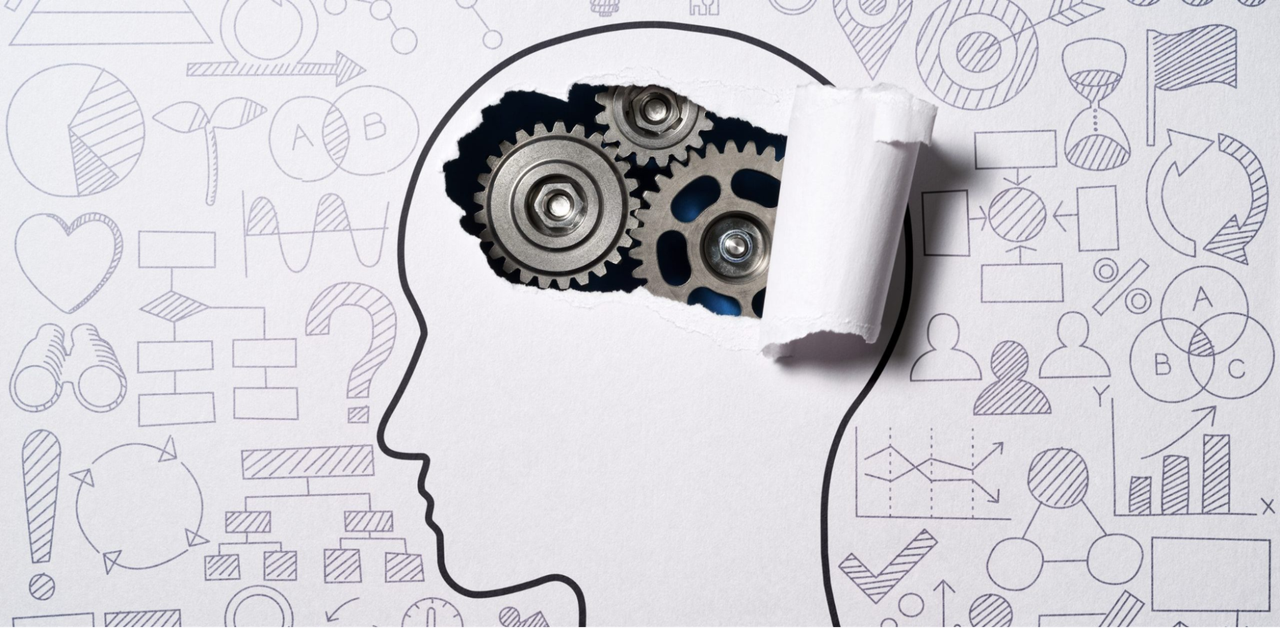
AI’s ability to provide immediate answers can reduce the need for sustained cognitive effort, and when students rely on AI to generate solutions, they may bypass the reasoning processes that are essential for deep learning.
While the systematic review highlights improved outcomes, it does not eliminate the concern that these outcomes may reflect task completion rather than genuine understanding.
The distinction between performance and comprehension becomes particularly relevant here because if students achieve correct answers without engaging in analytical thinking, the long-term value of those outcomes may be limited.
Over-Reliance and Reduced Cognitive Engagement
Closely related to critical thinking is the issue of over-reliance, because as AI tools become more integrated into daily academic tasks, students may begin to depend on them as default problem-solving mechanisms.
This can lead to reduced cognitive engagement, where learners interact with content at a surface level rather than exploring it in depth.
The systematic review notes increased motivation as a benefit, but this motivation may be tied to ease of task completion rather than intellectual curiosity. If students associate learning primarily with efficiency, they may be less inclined to engage in challenging or exploratory thinking.
Ethical and Pedagogical Concerns
The integration of AI also raises broader ethical questions about authorship, originality, and the purpose of education.
When AI contributes significantly to the production of academic work, it becomes difficult to determine the extent of a student’s individual contribution, and this challenges traditional notions of assessment, which are based on the evaluation of independent effort.
From a pedagogical perspective, educators must reconsider what it means to demonstrate knowledge, and if AI tools are capable of performing many academic tasks, then assessment methods must evolve to capture skills that cannot be easily automated.
Toward a Balanced Integration of AI
The available evidence suggests that AI is neither inherently beneficial nor inherently harmful, the impact depends on how it is integrated into educational systems.
A Michigan Virtual study has reported that students using AI has 83.9% average grades, while non-users were down to 82.4%. As more and more people adopt AI for learning, and there is wider acceptance for automation, this score can jump up. This means that it is not all bad, as long as one can find the right balance.
A balanced approach requires a shift in both teaching practices and assessment design.
Educators need to move beyond traditional evaluation methods that focus solely on outputs and instead emphasize processes such as reasoning, interpretation, and application, which may involve incorporating more interactive assessments, discussions, and project-based learning formats that require active engagement.
At the same time, students must develop an understanding of how to use AI as a support tool rather than a substitute for thinking, which will involve recognizing its strengths in efficiency and feedback while remaining aware of its limitations in reasoning and contextual judgment.
Institutional policies also play a critical role in shaping AI use, as clear guidelines on acceptable usage, combined with transparency in how AI tools are integrated into coursework, can help establish a consistent framework for both educators and students.
Rather than relying solely on enforcement mechanisms, such policies should aim to foster informed and responsible use.
Final Thoughts
Artificial intelligence has introduced a fundamental shift in the structure of modern education, because it has the ability to personalize learning, provide immediate feedback, and enhance performance is supported by empirical research, including a large-scale systematic review and cross-national meta-analysis.
While these findings confirm that AI has the potential to function as a powerful educational tool, at the same time, the risks associated with academic integrity, critical thinking, and over-reliance highlight the complexity of its role in the classroom.
AI does not simply add efficiency to existing systems; it changes how learning occurs and how it is measured, but the question of whether AI is a threat or a tool ultimately depends on how it is used.
When integrated thoughtfully, it can enhance both teaching and learning, and when used without clear boundaries, it can undermine essential cognitive and ethical dimensions of education.