Why the first visit matters more than most families expect
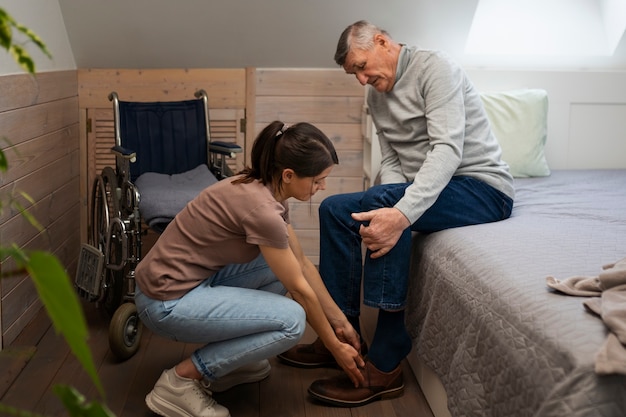
Photo by Freepik
The first in-home visit is not just “the start date.” It’s the moment your household learns whether this support will actually make life easier—or just add another moving part to manage.
Families often go into the first visit with two emotions that don’t mix well: relief and worry. Relief that help is finally here. Worry that the help won’t fit, the older adult won’t accept it, or the whole thing will feel invasive. And if you’re the adult child coordinating everything, you might be carrying a third emotion too: guilt. The quiet kind that shows up when you can’t be there every hour.
If you’re looking for in-home care available for seniors in El Paso TX, the first visit is where reassurance is either earned or lost. It’s where trust gets built through small details: how the caregiver introduces themselves, whether they speak to your loved one directly, whether they move at a respectful pace, and whether they notice the “tiny risks” in the home that turn into big setbacks later.
This guide is here to remove the guesswork. You’ll know what should happen, what you should prepare, and what signals tell you, early, whether you’ve got a good match.
Three takeaways you’ll get from this:
- A clear step-by-step flow of a strong first visit (so you can recognize quality).
- A “reassurance checklist”—what good care looks like within the first hour.
- A practical way to adjust the plan after day one without starting over.
And yes, this is the kind of first-visit structure many families ask Always Best Care to provide—calm, organized, and tailored to the person, not the brochure.
Quick answers: what the first visit is, how it works, what to prepare
What is the first visit in senior in-home help?
The first visit is the initial in-home shift where the caregiver begins support and confirms the care routine in the real environment—how your loved one moves, what help is truly needed, and what matters most for comfort and dignity. It’s part service, part observation, part relationship-building.
For context, “home care” (often called home care) typically focuses on non-medical help with daily routines, while clinical services (when needed) are usually handled by licensed medical professionals under a separate plan.
How does the first visit usually work?

Photo by Freepik
Most first visits follow a simple pattern: introduction, quick orientation to the home, confirmation of priorities, then hands-on support with one or two key routines (often meal support, mobility assistance, or personal care). The caregiver should communicate what they’re doing and why—without turning the home into a “project.”
A strong caregiver supports activities of daily living like bathing, dressing, toileting, and meals—always within the boundaries of non-medical care.
What should we prepare before the caregiver arrives?
Prepare just enough to reduce friction:
- Emergency contacts and key medical info (in a simple list)
- Preferred routines (wake time, meals, bathing preferences)
- A clear space to work safely (especially bathroom and kitchen)
- A short list of “please watch for this” concerns (falls, dizziness, confusion patterns)
You don’t need a perfect house. You need clarity.
Before the caregiver arrives: a prep checklist that prevents awkwardness
If you want the first visit to feel smooth, don’t prep by cleaning your baseboards. Prep by removing uncertainty. Most first-visit stress comes from tiny avoidable gaps: no one knows where the shower chair is, the medication list is outdated, the older adult feels ambushed, or the family expects the caregiver to “just know” what matters.
Here’s a prep checklist that actually helps.
1) Align on the goal for day one
Pick one primary goal and one secondary goal. Examples:
- Primary: safe shower with dignity
- Secondary: light lunch + hydration routine
Or: - Primary: safe mobility + toileting support
- Secondary: reduce fall risks in the hallway
When families try to cram five goals into day one, everyone feels rushed.
2) Create a one-page “home snapshot”
A simple sheet (paper is fine) with:
- Full name, preferred name, and how they like to be addressed
- Emergency contact(s)
- Mobility notes (walker? cane? unsteady after sitting?)
- Food preferences and allergies (if applicable)
- Communication notes (hearing issues, memory cues that help)
- “What calms them down” and “what annoys them” (this is gold)
This helps the caregiver treat your loved one like a person immediately, not a task list.
3) Stage the essentials where care happens
- Bathroom: towels, soap, clean clothes, non-slip mat
- Kitchen: a few easy meal options, water bottle/cup they like
- Bedroom: comfortable clothing, mobility device nearby
It’s not about convenience for the caregiver. It’s about reducing pauses where your loved one feels exposed or uncertain.
4) Talk to your loved one before the visit
Not a big speech. Just a straightforward frame:
- “Someone is coming to help make the day easier and safer.”
- “You’re still in charge. We’re just adding support.”
- “We’ll try it and adjust.”
If your loved one feels tricked, the first visit becomes a battle for control. If they feel respected, it becomes cooperation.
A small but important note about boundaries
In most non-medical home care arrangements, the caregiver does not administer medications unless permitted under local rules and care policies. They can usually provide reminders and support routines. If you’re unsure, ask the agency directly and align with the discharge plan or physician instructions. Medication safety is serious.
For local grounding, El Paso, Texas is spread out, and families often coordinate care around commutes, appointments, and cross-town drives. That makes having a clear first-visit plan even more valuable—because “we’ll figure it out later” tends to turn into missed timing.
What actually happens during the first visit (step-by-step)
A good first visit has a calm pace and a clear flow. Here’s what you should expect, in order.
Step 1: Arrival and respectful introduction
The caregiver should:
- Introduce themselves to your loved one first (not just the family)
- Confirm how your loved one wants to be addressed
- Explain what they’ll do today in simple terms
- Ask permission before entering private spaces (bedroom, bathroom)
This sets the tone: dignity and consent.
Step 2: Quick safety orientation
Not a home inspection. A fast scan:
- Where are the bathrooms?
- Any stairs that matter?
- Where is the walker/cane kept?
- Any pets that could trip someone?
- Where are common “pinch points” (tight hallway, slippery entry)
Falls are the most common fear families mention, and for good reason. A caregiver should naturally think about falls prevention without making the older adult feel fragile.
Step 3: Confirm priorities and preferences
This is where quality shows. The caregiver should ask things like:
- “What’s usually the hardest time of day?”
- “What do you want help with today?”
- “What do you want to keep doing yourself?”
You want support that preserves independence where it’s safe, not support that takes over.
Step 4: Begin with a “confidence builder” task
Great caregivers often start with something that creates early success:
- Make tea and sit together for a few minutes
- Help organize a comfortable chair area
- Do a simple breakfast routine
- Assist with a short walk to test steadiness
Why? Because it lowers anxiety and creates trust before more intimate tasks.
Step 5: Hands-on support with the key routine
Common first-visit routines include:
- Safe shower / grooming
- Meal prep and hydration
- Mobility support and light movement
- Toileting support and bathroom safety setup
- Light tidying to clear pathways
The caregiver should narrate just enough:
- “I’m going to place this towel here so you don’t have to twist.”
- “Let’s pause before standing—no rush.”
- “Would you like the water warmer or cooler?”
Those small choices feel like respect.
Step 6: Documentation and family update
At the end, you should get a clear summary:
- What went well
- What was harder than expected
- Any safety concerns noticed
- Suggested adjustments (hours, tasks, timing)
If the first visit ends with vague positivity—“Great, everything’s fine!”—push for specifics. Reassurance is built on detail, not cheerleading.
For role clarity, a caregiver in non-medical home care usually supports daily function and safety. If skilled medical care is needed, the plan should involve appropriate licensed professionals.
What “good” looks like in real life: reassurance signals vs. red flags
A family can often tell within the first hour whether the support feels steady. Here’s how to name what you’re sensing, so you can act on it.
Reassurance signals (green flags)
- Your loved one is spoken to directly and offered choices.
- The caregiver moves at your loved one’s pace, not the schedule’s pace.
- The caregiver asks permission before helping physically.
- The caregiver notices small risks (slippery mat, cluttered corner) without judgment.
- The caregiver keeps things simple—no overwhelming “program.”
- You get a clear recap at the end that makes you feel more informed.
Most importantly: your loved one seems a little less guarded by the end of the shift. That’s a win.
Red flags (things that usually get worse, not better)
- The caregiver talks mostly to the family, not the older adult.
- The caregiver rushes personal care or treats it like a checklist.
- They rearrange the home dramatically without asking.
- They seem uncomfortable with mobility support or transfers.
- They can’t explain what they did today in clear, practical terms.
Here’s the uncomfortable truth: families sometimes ignore red flags because they’re exhausted and don’t want to restart the search. But if the first visit feels wrong, the second and third visits rarely magically fix it.
This is exactly why choosing in-home care available for seniors in El Paso TX should be about fit and systems, not just availability.
Common first-visit hiccups—and how to fix them fast
Even good first visits can have friction. The goal isn’t perfection; it’s quick correction.
Hiccup 1: Your loved one resists help
This is common, especially if care feels like a loss of independence.
What helps:
- Start with companionship + light support, then build
- Let the older adult choose the order of tasks
- Use “I’m here to make it easier” language instead of “you need this”
- Avoid family members correcting the older adult in front of the caregiver
If resistance continues, it’s not a failure. It’s information about how care needs to be introduced.
Hiccup 2: Family expectations don’t match the care plan
Sometimes the family expects heavy housekeeping, deep cleaning, or complex medical tasks. Non-medical home care usually focuses on safety, daily routines, and light household support connected to care. Fix this by:
- Clarifying task boundaries with the agency immediately
- Listing “must-have” tasks vs “nice-to-have” tasks
- Adjusting hours if the plan is unrealistic
Hiccup 3: The schedule timing is wrong
Families often book “convenient” hours instead of “risky” hours. If mornings are shaky, mornings need coverage. If evenings are when falls happen, evenings need coverage. Fix it by tracking:
- hardest time of day
- appetite/hydration patterns
- mobility changes after sitting/standing
- mood changes late afternoon
Hiccup 4: Communication is too little or too much
Some families want constant updates; some want silence. Neither extreme works.
Fix it with a simple agreement:
- one daily summary
- immediate call for specific triggers (fall, fever, confusion spike, refusal to eat)
A good agency welcomes this clarity.
After the visit: how the care plan should tighten up

Photo by Freepik
The first visit shouldn’t end the conversation—it should sharpen it.
Here’s what a strong post-visit adjustment looks like:
1) Update the care plan with real observations
Not just “help with bathing.” Real observations:
- “Needs standby assist for transfers from chair.”
- “Prefers shower after breakfast, calmer that way.”
- “Gets dizzy if standing too quickly—pause before walking.”
2) Adjust the schedule to match real-life stress points
If the first shift revealed the true “hard hours,” adjust quickly. This is where agencies differ: some can pivot smoothly, others drag their feet. Your stress doesn’t wait.
3) Confirm caregiver consistency
Older adults often do better with consistency. If multiple caregivers will rotate, ask:
- Who will be the primary?
- How are notes shared between caregivers?
- How are preferences protected?
4) Decide what “success” means by week two
Pick 2–3 measurable outcomes:
- fewer near-falls
- consistent meals/hydration
- safe bathing routine without arguments
- family caregiver sleeping better
When outcomes are clear, care improves faster.
This is the moment where many families choose to formalize ongoing support with a provider like Always Best Care, because the plan becomes predictable—and predictability is what creates reassurance.
How much support is typical (and how to avoid overbooking or underbooking)
How much in-home support do seniors typically start with?
There’s no single number, but most families start with coverage in the highest-risk windows (often mornings or evenings) and adjust after the first few visits. The “right amount” is the amount that stabilizes safety and routine without stripping independence.
A practical table: match hours to the real need
| Situation in the Home | What You’ll Notice | A Common Starting Point | What to Watch in Week One |
| Morning instability | dizziness, slow transfers, bathroom risk | 3–4 hours in the morning | fewer rushed moments, steadier start |
| Personal care needs | bathing is stressful or unsafe | 2–4 visits/week timed to preference | dignity preserved, no rushing |
| Meal/hydration inconsistency | skipping meals, low fluids | midday check-ins or meal prep blocks | energy improves, fewer headaches |
| Family caregiver burnout | exhaustion, missed work, irritability | 4–6 hour blocks 2–4 days/week | family regains stamina |
| Post-hospital transition | fatigue, weakness, higher fall risk | longer daytime blocks initially | setbacks decrease, routine forms |
How much does in-home support cost?
Costs vary by hours, scheduling, and local market. Treat any numbers you hear online as estimates, not guarantees. Ask for:
- hourly rate
- minimum shift length
- weekend/holiday policies
- cancellation rules
If the plan involves recent discharge or complex conditions, align the home care plan with clinician guidance. Safety always outranks convenience.
A smart next step for El Paso families

Photo by Freepik
The first visit should leave you with fewer unanswered questions, not more. You should feel a small shift: the house is steadier, the routine is clearer, and your loved one feels respected—not managed.
If you’re still searching for in-home care available for seniors in El Paso TX, use the first visit as a real test. Ask for specifics. Watch pacing. Notice dignity. Demand clarity in the recap. That’s how you choose support you can actually trust.
The goal isn’t to “start care.” The goal is to start a routine that holds up when life gets messy.
FAQs
1) Should a family member stay for the entire first visit?
It helps if someone is present for the first 15–30 minutes to share priorities and answer questions, then step back if your loved one is comfortable. Sometimes privacy helps cooperation, especially during personal care.
2) What if we don’t like the caregiver after the first visit?
Say it quickly and specifically: “The pace felt rushed,” or “Communication didn’t feel respectful.” A strong agency will adjust and rematch without making you feel guilty.
3) What information should we never forget to share?
Mobility risks (falls, dizziness), cognitive concerns (confusion patterns), and what “calms” your loved one when anxious. Those three reduce setbacks more than most paperwork.
4) Can the caregiver drive my loved one to appointments?
Policies vary by agency and insurance arrangements. Ask about transportation options, documentation, and whether the caregiver can use the client’s car.
5) What’s the clearest sign the first visit went well?
Your loved one seems less tense and the family feels more informed—because the caregiver provided a specific, practical recap and a clear plan for the next shift.
Leave a Reply